
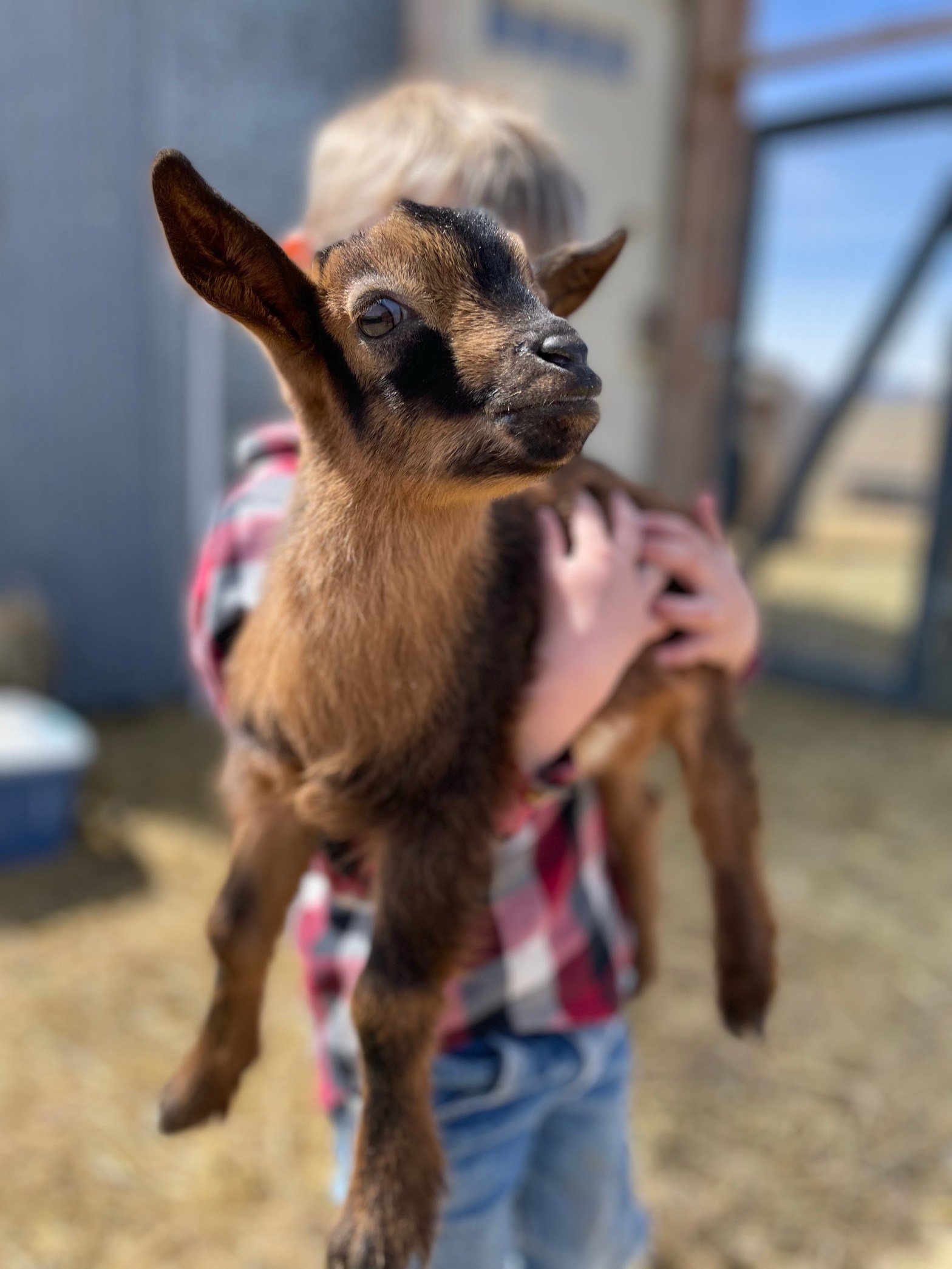
Where you can find them
Many small hobby farms have an abundance of pet goats for sale, though some neglect disbudding, general healthcare and biosecurity, or fail to spend enough time taming the goats. It’s wise to ask questions and get to know your producer and their goats before making a purchase if you want a healthy, well-cared for goat that is more likely to thrive and less likely to cost you regular vet bills.
Temperament
Personality in goats can be genetic, so if you are concerned about getting an extra-stubborn goat, you might want to ask the breeder some questions about the parent goats and their opinion on the level of friendliness and agreeable behavior they possess. Also be sure to ask the breeder if the kids have been handled a lot since birth, as this is the most crucial time of their life experience that will determine their trust for humans. It is hard to tame a goat that was not handled enough as a newborn kid and you will likely be very disappointed at your goats standoffishness that typically doesn’t subside much even with time and lots of effort.
Horns
Most goats have horns naturally.Sometimes, as a result of genetic selection, polled(naturally hornless) goats can obtained, but in many cases this is hard to achieve. Horns are usually removed by disbudding the baby goats at around a week old. For homes with small children, it’s best to have hornless goats even if they are friendly because they can accidentally hit someone while playing with each other or with you or your children. Some people like the horns and want their goats in their most natural state, and that’s completely fine and your choice to make. Be aware that goats with horns can get entangled or stuck in fences and other structures, though if you provide adequate prevention of hazards in their space, this can be avoided. While horns can sometimes be successfully removed by banding or other methods later in life, this is painful and stressful for the goat and results in much more grief than the initial disbudding procedure which takes mere seconds and there is usually no bleeding at all. Dehorning paste has been known to cause eye irritation as it can run down into their eyes possibly even causing blindness, and is not generally recommended, though still an option.
USDA info on disbudding practices.
Let the breeder know what you are looking for
If you decide to get hornless goats, be sure to let the breeder know. Many small pet farms will leave horns on simply because they don’t know how to disbud or don’t want to deal with the hassle. Be sure to ask before you buy the goats. If they try to sell you a goat older than 7 days and tell you it can be disbudded later, this is often not possible and you would end up with a horned or misshapen horned goat. If you want horns left on your baby goat, many breeders will require a deposit or payment in full upfront as soon as the goat is born. To ensure availability of a goat with horns, it’s important to communicate with the breeder you intend to purchase from so they can plan for it.
Please remember, goats are very social. Though they love your human attention and treats, they need each other. Many reputable farms will not even consider selling ONE pet goat unless they’re assured you already have goats for companions. Even if you have children who plan to spend lots of time with the goat, the goat will still not be happy without a barn buddy. Many farms offer discounts on multiple goat purchases for this reason, so you will not have to go to much more expense to get TWO goats and you will find your goat happier and much less likely to try escaping and getting into trouble.
Health
Goats are not like a dog or cat, they are livestock. Many small animal veterinarians will not work with goats or even have experience with their specific needs. At some point, you will likely need a veterinary for your goats health, whether it’s with goat pregnancy, delivery, accidental injuries or just common illnesses. Some birthing incidents require c-sections and goat kids are sometimes mal-positioned for birth and need re-situating by an experienced producer or vet before they can be born. If you want your baby goats to be disbudded or castrated assuming you plan to breed for cute little baby goats, you will need a vet unless you’re willing to learn to do these things yourself and invest in the necessary tools. It is highly recommended to establish a relationship with a nearby vet that will work with goats before you make the final decision to raise goats in your area.
Feed, costs, etc.
Goats are quite a commitment. That’s not to discourage, just to let you know that it’s easy to spend money and a lot of time on goat supplies and maintenance, feed and treats, and other things.
Hay
Because of the nature of goat’s to browse and nibble on plants above the ground like brush, trees and tall weeds, they are not as useful for grazing and won’t eat much grass unless it’s all they have available, and on a straight grass diet they will not thrive because of their unique nutrient needs.
Goats need GOOD quality hay and this can be a big expense depending on where you live and what’s available. You will need to make connections with a local rancher and buy hay(they prefer you buy in bulk, not a bale or two at a time) and you will need a storage solution for the hay. It cannot be left out in the rain & snow or moisture will run down into to stack and mold all the bales, so a good tarp without holes at least is needed to keep it dry.
Goats should have minerals available to them, because when they aren’t able to roam and find the plant nutrients they need, they easily become deficient and can suffer from poor hair coat, dry, flakey skin, poor body condition(skinny) and become more susceptible to parasites which can then be fatal if not treated. Be sure to buy GOAT minerals, and not multi-species mixes made for sheep too. Goats need a lot of copper, and the amount they require is toxic in sheep so the goats would become deficient. If you also raise sheep, multi species mineral is better than nothing and you may consider giving a copper bolus pill to your goats once or twice a year to make up for that(I suggest asking your vet first).
Goats should not eat off the ground because they are very prone to parasites which can be picked up from the ground, so a raised hay feeder is recommended. If the feeder has a tray to catch the hay leaves, be sure to clean out any poop that falls into it daily, because the poop contains the worm eggs that will infect your goats if they eat it. Worms are also injested by the goats during grazing, especially when the grass is short and with the early morning dew when the worm larvae crawl up the stems waiting for their host (a goat) to swallow them. You can help manage this risk by not grazing in the morning and dry lotting your goats for the night with raised hay feeders only.
Fence
Unless you plan to free range your goats, you will need to prepare a secure fencing option and don’t underestimate the cost of fencing materials and labor involved. Goats that are not contained will do annoying things, like greet the package man who may not appreciate a goat chewing on his shirt tail, and hop onto your visitor’s car roof, not to mention they love to eat bushes and tree branches(and tree bark!) and will be very destructive to your yard’s decorative plants before eating a bite of grass off your lawn you hoped they would trim for you. And don’t forget, some common landscaping plants are poisonous to goats! Here’s one list of believed poisonous plants at Fiasco farm website. You might want to keep activated charcoal on hand in the case of poisoning.
Hoof trimming
Goats hooves will over grow and need trimmed ideally every two months but some can go longer between trims. You will need a stand with a head catch to contain them to do this easily, otherwise you may be able to just tie them to a post while trimming. Small garden pruners are sharp enough and work great, we like the orange handled ones. (Tip: trimming is easier when their hooves are wet, like trimming your toenails after a shower!)
Milk goats
If you are planning to buy goats for milk, you may want to go with registered stock and find them from someone who milks their goats and can tell you how much milk their goats make and how good the udders are for milking(ask for photos of the parent goat’s udder). Some udders(especially on Nigerians) can be hard to milk for different reasons, and some goats aren’t as dairy(won’t make much milk). Milking goats is also a big commitment. You must expect to milk on a schedule twice a day at 12 hr intervals to maintain good milk production. It’s so rewarding though and if you’re like me, you’ll fall in love with it. Store milk won’t even be appealing anymore after you’ve tasted the creamy goodness of fresh goat’s milk from your own herd!
Goats are wonderful little creatures and can provide you with much joy and entertainment and even fresh milk!
You may want to ask the producer about getting a BILL OF SALE or Certificate of Identification for your pet goat if buying unregistered animals. (USDA types of ID for goats)
If buying registered goats, it’s recommended that you receive the SIGNED TRANSFER when the purchases is made. While it’s courteous to trust that a breeder will send the papers to you when they can, it’s best to get these taken care of right away when possible. In the case of purchasing a kid goat that is not registered yet, they should send you home with an application for registry(they need to sign this) or they may prefer to send it in to be transferred into your name at the same time the kid is registered, in which case the registry would send the certificate of ownership and registry to YOU once the kid is registered.
 Aspen Leaf Dairy Goats